Blog
Blog
Minor Injury Cap 2026: When the $6,306 Limit Applies — and When It Doesn’t

If you were injured in a car accident in Alberta in 2026, you may have already been told that your injury is “minor” and that your compensation is capped. For many people, that statement comes early in the claims process, sometimes before the full impact of an injury is even understood.
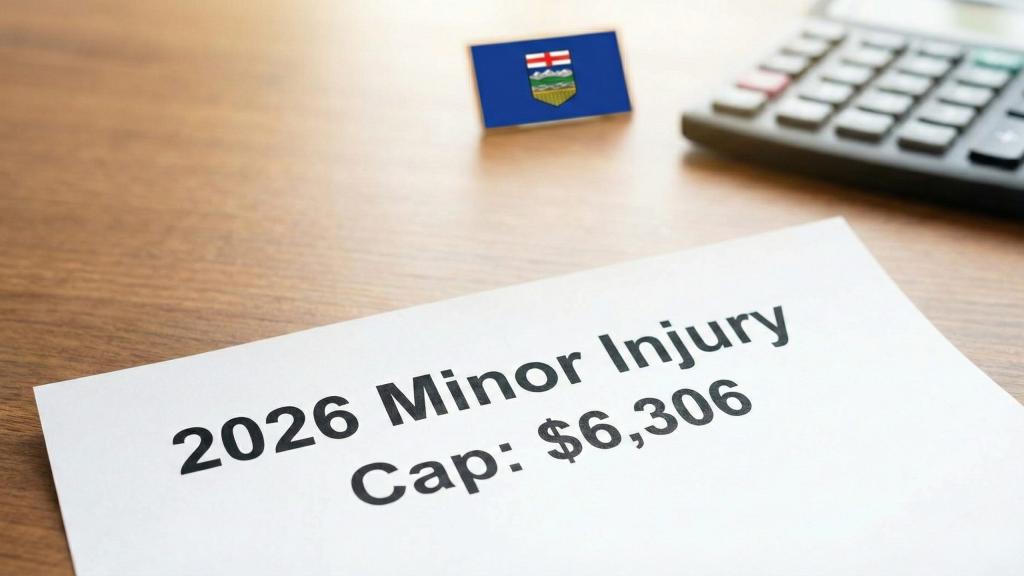
In 2026, Alberta’s minor injury cap limits pain and suffering damages to $6,306. But that limit does not apply to every injury, and it is not a hard-and-fast rule.
Understanding how the cap works and when it does not apply is an important first step in protecting your rights.
Is my injury capped in 2026?
Not necessarily.
The minor injury cap is not automatic. Whether an injury is capped depends on the actual impact of the injury on your life, not simply how an insurance company labels it. If an injury results in ongoing pain, functional limitations, or a meaningful loss of ability to work or carry out daily activities, it may fall outside the cap, even if it began as what insurers often call a “minor” injury.
In Alberta, the law looks at loss, not just diagnosis.
What is the minor injury cap in Alberta for 2026?
The minor injury cap is a government-set limit on non-pecuniary damages, commonly referred to as pain and suffering damages, for certain injuries arising from motor vehicle accidents.
For 2026, that limit is $6,306.
It is important to understand what the cap applies to and what it does not.
The cap only limits compensation for pain and suffering. It does not limit claims for income loss, medical and rehabilitation expenses, or future care costs. Those parts of a claim are assessed separately and are not subject to the cap.
What injuries are considered “minor”?
Under Alberta law, minor injuries typically include certain sprains, strains, and soft-tissue injuries that resolve and do not result in serious impairment.
That final qualification matters.
An injury that causes ongoing pain, reduced function, or long-term limitations may no longer meet the legal definition of “minor,” even if early imaging appears normal or the injury initially seems mild. Many injuries evolve over time, and the true impact is not always clear in the early weeks or months following a collision.
Why the minor injury cap does not always apply
Insurance companies often reference the cap early in a claim. In many cases, this happens before treatment is complete and before the long-term effects of an injury are known.
The law, however, focuses on how an injury affects a person’s life.
If an injury results in:
- chronic or persistent pain
- ongoing physical limitations
- difficulty returning to work or performing job duties
- long-term interference with daily activities
then the cap may not apply.
These are not technical loopholes, nor are they exceptions that someone has to “find.” They reflect how the legislation is designed to work. The minor injury cap is meant to apply only in cases where an injury is genuinely minor in both diagnosis and impact. When an injury causes ongoing pain, functional limitations, or a long-term disruption to a person’s life, ensuring the cap does not apply is applying the law as it was intended.
Injury victims are not required to minimize their losses or accept an early label that does not reflect their reality. Taking the time to properly document symptoms, treatment, and functional limitations is not a loophole or a strategy. It is how fair compensation is determined under Alberta law.
Understanding and applying the law correctly protects injured people. It does not take advantage of the system.
Northern Alberta context matters
In Northern Alberta, serious highway collisions, commercial vehicle accidents, and higher-speed impacts are common. Many people in this region work in physically demanding jobs in the trades, transportation, construction, and resource-based industries, where physical ability is directly tied to earning a living.
Injuries from these accidents are often more complex than they initially appear. What may begin as a soft tissue injury can, over time, develop into ongoing pain, reduced mobility, or limitations that make regular job duties difficult or impossible. When someone relies on their physical capacity to work, even a partial loss of function can have serious consequences for their livelihood and their family.
We regularly see injuries that insurance companies describe early on as “minor” evolve into conditions that affect a person’s ability to work, care for their family, or participate fully in everyday life. Each case turns on its own facts. A proper assessment looks beyond labels and focuses on how an injury actually affects a person in the real world.
Why timing matters in 2026 injury claims
One of the most common mistakes people make is accepting a “minor injury” classification too early. Once a claim is settled, it cannot be reopened if symptoms worsen or limitations become permanent.
In 2026 claims, understanding how the cap works and ensuring injuries are properly documented over time can make a significant difference in how a claim unfolds.
Getting clarity early matters
If you have been told your injury is “minor,” it is worth taking the time to understand what that means and whether it is accurate. The Injury Law Team at KMSC Law helps people across Northern Alberta assess how Alberta’s injury laws apply to their specific situation and whether the minor injury cap should apply at all.
A careful, informed approach early in the process can protect your ability to seek fair compensation later.

Have a legal question?
Get effective answers.
BOOK A FREE CONSULTATION
Frequently Asked Questions
Does the $6,306 minor injury cap apply to all car accident injuries in 2026?
No. The cap only applies to injuries that meet the legal definition of “minor.” Many injuries, including those that result in chronic pain or lasting impairment, are not capped.
Is the minor injury cap the same every year?
No. The cap is adjusted annually for inflation. For 2026, the cap is $6,306. Learn more by reading our 2026 cap announcement blog here.
If my injury is capped, does that limit my entire claim?
No. The cap only applies to pain and suffering damages. Compensation for income loss, medical treatment, rehabilitation, and future care is assessed separately.
Who decides whether my injury is minor?
Insurance companies may make an early assessment, but that assessment is not final. Whether an injury is legally “minor” depends on medical evidence and how the injury affects your ability to work and live.
What if my injury gets worse over time?
Many injuries evolve. Symptoms may worsen or persist beyond initial expectations. This is why it is important not to rush decisions or settlements before the long-term impact of an injury is clear.
About the author:

At KMSC, we are committed to providing practical and effective legal solutions for our clients.
If your issue is urgent, please don’t hesitate to contact us toll-free at 1.888.531.7771, we’d be happy to assist you.